The original Crystal Palace FC (1861-76)
December 15 2004
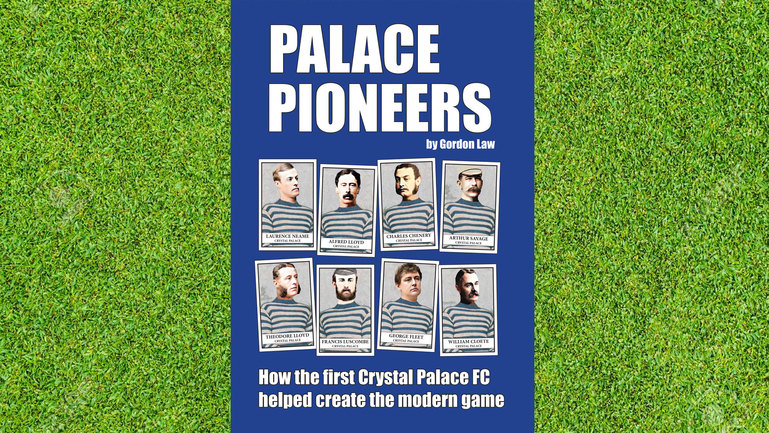
Palace Pioneers
There was a Crystal Palace FC that existed before the current club and it helped lay down the foundations of football for the world.
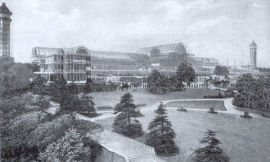
The team was formed by cricketers from Crystal Palace Cricket Club and old public schoolboys from the local villages of Penge and Sydenham.
The book Palace Pioneers tells the story of the short-lived club and how these men helped invent Association football.
In the Victorian era, being an amateur sportsman was seen as an important social distinction as the middle class played for "the love of the game" and not because they needed the money professionalism may have offered.
Founded in 1861, the amateur Crystal Palace played friendlies on a portion of Crystal Palace Park Cricket Ground. They also played in a field behind the Crooked Billet pub in Penge for two seasons between 1864-66.
At this time, there were no universally accepted rules for matches and they often ended in a shambles. But in 1863 representatives from the early clubs, including Crystal Palace, organised a meeting at the Freemasons' Tavern, in London, to form a "Football Association" so a set of rules could be established.
As one of the 12 founder members, Crystal Palace continued to be instrumental in the development of the FA and from 1864 to 1868, Palace's James Turner was the second FA Treasurer.
A number of county matches took place over the next few years to encourage use of the FA rules – the first of which was between Middlesex and a combined Kent-Surrey side – and Palace players were selected.
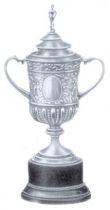
When the Football Association launched the FA Cup in 1871, Crystal Palace were one of the original 15 teams that entered. League football did not exist back then. Palace's Douglas Allport was one of three FA members delegated to buy the first FA Cup.
Palace made the semi-finals of the cup's inaugural season, brushing aside Hitchin, Maidenhead and the Wanderers. But in their club colours of blue and white, they lost 3-0 to Royal Engineers – one of the best sides of that era.
Scotland hosted England in the world's first official international match in November 1872 and Crystal Palace forward Charles Chenery was in the English team for that historic fixture which ended up 0-0.
Crystal Palace's Alexander Morten was England's chosen goalkeeper but had to withdraw from the original squad due to injury.
However, Morten was fit for his country's next match at home to Scotland and was handed the armband to become the second-ever England captain. A stockbroker by trade, Morten later served on the FA Committee in 1874. Chenery scored in England's 4-2 win and was the only player to play in England's first three games.
Palace keeper Arthur Savage and centre forward Charles Smith played in the fifth ever international football match – again England versus Scotland in March 1876. Insurance clerk Smith served on the FA Committee in 1875-76.
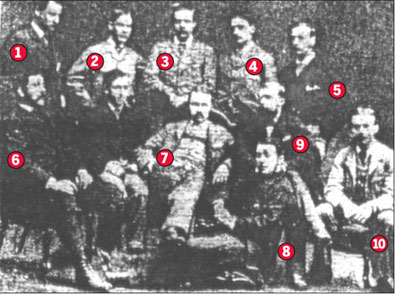
The first known England football team photo taken before their fifth international. No.3 is Charles Smith and No.6 is Arthur Savage.
Palace continued playing in the FA Cup along with the usual round of friendly matches against other London sides but disbanded in 1876.
It is possible they had nowhere to play their matches after being forced to leave Crystal Palace Park. Palace's last recorded match was against Barnes in December 1875. The Football League was formed in 1888.

Playing kit
Contrary to reports, there is no evidence the team played in light blue and white halves. The Football Annuals of the time described the kit as: "Blue and white jersey, (navy) blue knickerbockers and dark blue stockings." It is likely the shirts were one-inch hoops as that was the most popular style of this time.
The club's achievements
1863: Formed the Football Association with representatives from 11 other clubs and agreed on the first set rules for the game of football.
1871: Original participants of the world's first football cup competition – the FA Cup – and it's likely the team played the first-ever tie. They end up reaching the semi-final.
1872: Had one player selected for the world's first-ever international football match, Scotland vs England.
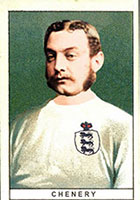
Palace's England internationals
Charles John Chenery (1872-74) 3 Caps, 1 goal
Alexander Morten (1873) 1 Cap
Arthur Henry Patrick Savage (1876) 1 Cap
Charles Eastlake Smith (1876) 1 Cap


Palace Pioneers tells the story of the first Crystal Palace FC, the team’s acclaimed history and its legacy. There is an in-depth review of each season, player profiles, over 100 photographs, plus extensive facts and stats. This book is a complete record of the celebrated club that all football enthusiasts will enjoy.
Most appearances
Douglas Allport - 107
Alfred Howard Lloyd - 65
Charles Eastlake Smith - 56
Alexander Morten - 52
Laurence Harding Neame - 44
James Turner - 43
George Rutland Barrington Fleet - 43
William Manning Allport - 42
Charles John Chenery - 41
Theodore Lloyd - 37
Arthur Lockett Cutbill - 35
Charles Cyrus Armitage - 33
John Henry Vigne - 31
William Bouch - 30
Frederick Brewer Soden - 29
Charlie Christopher Harvey - 27
Charles Farquhar - 26
Cecil Henry Barber - 24
John Sharland - 25
Reginald Cutbill - 24
Charles Farrington Cumberlege - 23
Robert Leete Allport - 23
Henry Lloyd - 22
James Henry Kingsford - 21
HC Masterman - 21
Frank Alpe - 20
Robert Kennett Kingsford - 20
*If you have any information about the players involved with the first CPFC, get in touch at editor@holmesdale.net
Latest Headlines
-
Palace: The destroyers of Premier League title hopes
Apr 18 2024 -
Palace dent Reds' title hopes
Apr 14 2024 -
Eagles defeated by champions
Apr 6 2024
Palace Talk Forum Latest
Oliver Glasner
at 4.44pm by doombear
West Ham Predictions.
at 4.27pm by Willo
West Ham Predictions.
at 4.19pm by silvertop
Oliver Glasner
at 4.15pm by Lanzo-Ad
Oliver Glasner
at 4.13pm by Lanzo-Ad
Oliver Glasner
at 3.52pm by pssguy
 Login / Register
All images and text on this site are copyright © 1999-2023 The Holmesdale Online, unless otherwise stated.
Web Design by Guntrisoft Ltd.