What a Palace home game feels like from the stands
March 2 2026
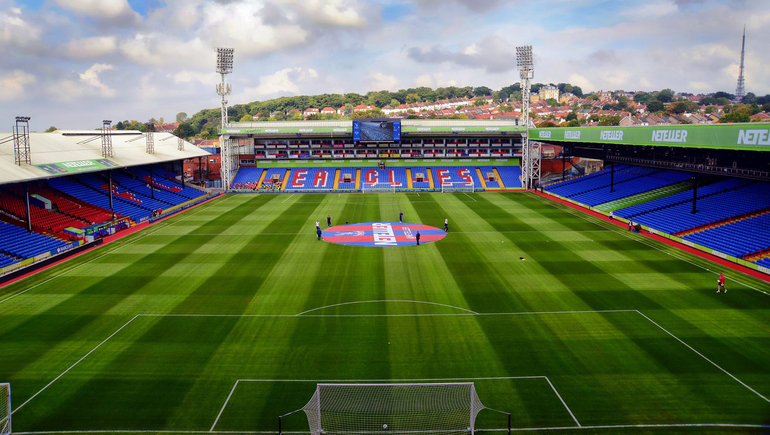
Selhurst Park (Photo: Andy Roberts)
A Crystal Palace home match does not begin at kick off but in the build-up much earlier, writes Peter Blake.
It starts on trains into south London, in pubs around Norwood, and in the steady flow of supporters moving towards Selhurst Park with the same habits they have kept for years.
Some are meeting friends in the same place they always do. Some are walking up from the station talking about the team, the opposition and who needs a big game. Even before the ground appears, there is a sense that this is not just another afternoon out. It is part of the rhythm of life for the people going.
That is one of the first things you notice from a fan’s point of view. Palace at home still feels local in the best sense. There are bigger stadiums in England and louder headlines around other clubs, along with all the usual noise that surrounds modern football, from round the clock coverage to betting sites pushing every angle of the weekend.
Selhurst Park cuts through that. It makes the match feel close and personal. You are not drifting into a huge bowl where everything feels distant. You are arriving at a ground that feels stitched into its surroundings, with all the noise, tension and expectation packed tightly together.
Selhurst Park feels tight before the match evenstarts
The approach to the stadium matters. The streets around the ground start to fill with colour, scarves, food stalls and that familiar pre match noise that builds in small bursts rather than one clean wave. Fans stop to talk, check the line up, debate the midfield and predict how Palace will try to attack the game.
There is always a little edge in those conversations because Palace home matches rarely feel passive. Supporters expect effort, front foot football and a side that understands what the crowd responds to.
Once you get through the turnstiles, that feeling sharpens. Selhurst Park is not polished in a way that strips out character.
It feels compact, old in places, alive and direct. You are close enough to the pitch to feel involved in every part of the game. That makes a major difference. At some grounds, the crowd watches. At Palace, the crowd feels like it presses in on the match.
The atmosphere is not just loud, it is constant
A lot gets said about the atmosphere at Palace, and most of it is deserved. From the stands, the main thing is not simply volume. It is how constant the energy feels. There is noise before the players emerge, noise when the game slows, noise when Palace press, noise when a tackle goes in. The Holmesdale end gives the place its pulse, but the mood spreads across the ground quickly when the team give supporters something to grab onto.
That is what makes a home game at Palace stand out. The crowd reacts to intent. A winger driving at his full back gets a lift from the stands. A midfielder snapping into a challenge brings a roar. A quick break that turns defence into attack in two passes can change the mood of the whole stadium. Fans are not there to sit back and admire patterns for their own sake. They want to see a side that plays with courage and energy.
From a supporter’s perspective, that relationship between team and crowd is a huge part of the experience. Palace fans do not expect perfection. They do expect commitment. If the team looks aggressive, organised and willing to fight for second balls, the ground responds immediately.
The match always feels like it can turn in seconds
One of the defining feelings of watching Palace at home is that the game never seems settled for long. Even in matches where Palace are on top, there is a nervous edge because football at Selhurst Park often runs on momentum. A good five-minute spell can drag the whole stadium with it. A poor giveaway can tighten everything up. The shifts are quick and obvious from the stands.
That creates a particular kind of tension. You celebrate the strong moments harder because you know how valuable they are. A corner won after a spell of pressure feels bigger. A last ditch block gets treated almost like a goal. A winger beating his man near the byline can lift everyone out of their seat before the final ball has even arrived. There is a physicality to the support. Fans are not just observing events. They are riding every swing of the match with the team.
Certain players suit Selhurst Park more than others
From a Palace fan’s point of view, some types of player always seem made for home matches in SE25. Quick wide players usually connect fast with the crowd because they give the stadium what it craves most: direct threat. A forward who runs channels, chases lost causes and presses centre backs properly will earn respect quickly. The same is true of a midfielder who wins duels and keeps the game moving forward rather than slowing it down for the sake of safety.
That helps explain why flair on its own is never enough. Palace supporters appreciate skill, but they respond most strongly to players who combine talent with edge. They want to see attackers take responsibility. They want defenders who relish a battle. They want midfielders who can handle the pace of a Premier League match without disappearing from it.
At home, every action is judged through that lens. If a player looks hesitant, the crowd notices. If he takes the game on, the crowd stays with him even when things do not come off every time.
There is pride in the ground itself
Another thing that stands out from inside Selhurst Park is the pride Palace fans take in the place. It is not about pretending the ground is the biggest or newest. It is about knowing it has identity. In an era when many stadiums can feel interchangeable, Selhurst Park still feels like Crystal Palace. That matters to supporters.
The stands are close, the sightlines pull you into the action, and the whole ground feels built around noise and reaction. Fans know away teams do not get an easy afternoon there. They know the place can become hostile, intense and draining when Palace are playing on the front foot. That gives home supporters a certain satisfaction. The ground is not just where the team plays. It is part of the club’s character.
The crowd can carry the team, but it also demands honesty
Support at Palace comes with backing, but it also comes with standards. Fans will lift the team in difficult spells, but they also want honesty in the performance. A side that works, runs and competes will usually keep the crowd with it. A side that looks soft or passive will hear the frustration.
That honesty is part of what makes the experience feel real. Nothing is manufactured. When the noise rises, it rises because the supporters mean it. When tension appears, it is because the game has demanded it. From the stands, that makes the afternoon feel more genuine than at grounds where the atmosphere can come and go without much relation to what is happening on the pitch.
You leave feeling like you have been in the match
That may be the best way to describe a Crystal Palace home game from a fan’s perspective. You do not leave feeling like you have simply watched a sporting event. You leave feeling like you have been in it. The walk away from the ground is full of instant analysis, emotion and replayed moments. People talk through chances, substitutions, refereeing calls and who stood up when the game got rough.
That is what Selhurst Park does at its best. It pulls supporters into every phase of the contest and gives the match a shape that feels emotional as much as tactical. A Crystal Palace home game is not built on polish. It is built on closeness, noise, direct football and a crowd that wants to feel every moment properly. From the stands, that is exactly what makes it memorable.
Latest Headlines
-

Palace draw a blank at Leeds
Sep 20 2026 -

Palace make dream Europa debut
Sep 17 2026 -

Late heartbreak for 10-man Palace
Sep 12 2026
Palace Talk Forum Latest
Sage is sage
at 12.52pm by ASCPFC
Timber
at 12.36pm by chris123
The Academy
at 10.27am by taylors lovechild
Leeds vs. Crystal Palace match thread
at 10.00am by ASCPFC
Ex Palace players
at 9.44am by whatton
Our most critical season ?
at 10.01pm by cryrst
Main Stand redevelopment thread
at 9.08pm by rikz
Players for Sage during International Break
at 7.48pm by Eagle-Trucker
Daniel Munoz
at 2.10pm by BromleyMonkey
Guessand
at 1.59pm by PalazioVecchio
 Login / Register
All images and text on this site are copyright © 1999-2025 The Holmesdale Online, unless otherwise stated.
Web Design by Guntrisoft Ltd.