What Pierre Sage could bring to Selhurst Park
July 1 2026
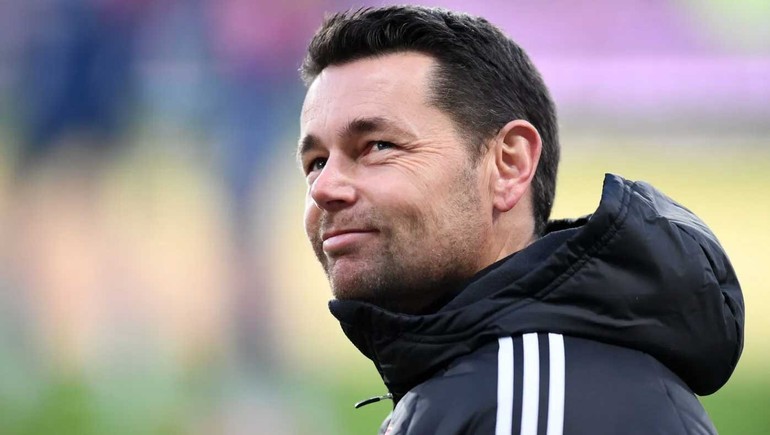
Pierre Sage
Crystal Palace have entered a new managerial chapter with the appointment of Pierre Sage, the former Lens manager, as Oliver Glasner’s replacement at Selhurst Park, writes Ben Mortimer.
For supporters, this is not just another change in the dugout. Palace are not starting from the bottom or looking for someone to simply steady the ship. The club is trying to build on a period of real progress, higher expectations, and a stronger sense of identity.
That makes Sage’s arrival especially interesting. He comes from French football with growing credibility, a clear coaching profile, and enough recent success to suggest Palace have backed more than a short-term appointment. The bigger question now is what he can realistically bring to the Premier League, and how quickly Palace fans will see those ideas on the pitch.
Why Palace Turned to Sage
Sage fits the profile of a modern coach: structured, tactically detailed, and comfortable working with a team that needs both discipline and attacking purpose. Palace could have looked for a safer Premier League name, but instead they have chosen a manager whose reputation has grown through his work in France.
That decision makes sense when you consider where Palace are as a club. This is not a survival-only job. Supporters now expect organisation, intensity, and ambition, especially at Selhurst Park. Palace need a manager who can continue upward momentum while still putting his own stamp on the side.
Sage’s appeal lies in that balance. His teams have shown tactical clarity, but he is not being brought in to rip everything up immediately. The best version of this appointment would see him preserve the good habits Palace developed under Glasner while gradually adding his own patterns, pressing ideas, and in-game flexibility.
What Sage Achieved at Lens
The main reason Palace fans should take Sage seriously is simple: his work at Lens carried weight. He helped build a competitive, disciplined, and tactically clear side in Ligue 1, giving Palace a strong foundation for believing he can handle a demanding dressing room and a higher-pressure environment.
In 2025–26, Sage led Lens to a second-place finish in Ligue 1 and a Coupe de France win, which made him one of the standout coaching stories in France.
Lens were not just energetic. They were difficult to play against, well-drilled without the ball, and capable of controlling matches through structure rather than relying only on individual moments. That matters for Palace because the Premier League punishes vague ideas quickly. A manager needs repeatable habits, not just motivational language.
Still, success in France does not guarantee success in England. The rhythm of Premier League football is different, the physical level is relentless, and opponents adjust quickly. Sage arrives with credibility, but he will still have to prove that his methods can travel.
What Palace Fans Will Watch in Sage’s First Matches
The early weeks will tell supporters a lot. Team selection will be the first clue. Does Sage trust the same core that performed under Glasner, or does he immediately make changes to suit his own style? Does he keep a back-three structure, or move toward a more flexible shape depending on the opponent?
Palace fans will also watch the pressing. A new manager can talk about intensity, but the real evidence is how quickly players close passing lanes, how coordinated the midfield looks, and whether Palace can turn regains into meaningful attacks.
As Sage begins shaping Palace’s next chapter, supporters will be watching more than just results. Early team selections, pressing intensity, set-piece routines, summer recruitment, and the opening Premier League fixtures will all influence how fans judge the new era. When Palace supporters look ahead to major matches, checking team news, form guides, and football market expectations can add useful context, according to 7bet sportsbook experts. Those wider signals often show how a fixture is being read beyond the fanbase.
The Tactical Ideas Palace Fans Could See
The most interesting part of the Sage appointment is tactical. Palace already has players suited to direct transitions, aggressive defending, and quick attacking combinations. Sage’s task is to connect those qualities into a clear system.
One possibility is that he continues with a back-three or hybrid defensive shape. That would offer continuity for a squad used to defending with numbers centrally while still allowing wing-backs or wide players to push forward. However, Sage may also adapt the shape depending on opposition pressure, especially against the strongest Premier League sides.
Supporters may notice several early tactical themes:
More coordinated pressing from the front rather than isolated closing down
Faster transitions after winning the ball in midfield
Wide overloads designed to create crossing or cut-back opportunities
Greater emphasis on set pieces as a reliable source of goals
More compact distances between defence, midfield, and attack
The key will be balance. Palace cannot afford to become open in the name of intensity. Sage’s best route may be a controlled version of aggressive football: press when the trigger is right, drop into shape when needed, and use the pace in the squad to attack quickly once possession turns over.
The Challenge of Replacing Oliver Glasner
Sage is not walking into a blank project. Glasner left a strong benchmark, and that changes the pressure around the job. Palace supporters have seen what a well-coached, confident team can look like, so patience may come with conditions.
The challenge is not simply to be different. It is to be better without causing unnecessary disruption. Sage must respect what already works: the connection with the crowd, the defensive structure, the transition threat, and the belief that Palace can compete with strong sides.
At the same time, he cannot become a caretaker of someone else’s ideas. A new manager needs authority. He must make clear decisions on roles, recruitment priorities, and tactical principles. The best managers balance continuity with conviction, and that may define Sage’s first season.
Can Sage’s Lens Success Translate to the Premier League?
This is the question that will follow Sage until Palace produce consistent performances. Ligue 1 success shows he can coach, organise, and improve a team. The Premier League will test whether he can adapt quickly, manage deeper squads, handle fixture congestion, and respond when opponents target weaknesses.
A successful first season does not have to mean a dramatic leap up the table. For Palace, success may look like stability, a clear playing identity, strong home performances, smart recruitment, and visible development in the squad. Fans will want to see a team that knows what it is trying to do.
Sage arrives at Selhurst Park with momentum, but also with pressure.
Palace have raised their standards, and supporters will expect the new manager to build on that rather than restart the cycle. If he can bring structure, intensity, and tactical detail without losing the edge Palace already had, this new era could become one worth watching closely.
Latest Headlines
-

Guessand who's back!
Aug 12 2026 -

Palace land McNeil as Johnson heads to Everton
Aug 11 2026 -
Why Selhurst Park still gives Crystal Palace their edge
Aug 11 2026
Palace Talk Forum Latest
Palace team vs SC Freiburg
at 4.22pm by Jacey
Sage in his own words (Before Palace)
at 4.10pm by DANGERCLOSE
"Like a New Signing" Contenders
at 3.48pm by eritheagle
What's happened to Palace TV
at 3.41pm by mogrem
Wilf,in his prime,presently!!
at 3.19pm by ASCPFC
Mateta to AC Milan?
at 3.13pm by Eagleman13
Positive about 26/27
at 2.10pm by BromleyMonkey
U18s away at West Ham 15/8 Sat
at 1.16pm by Eagleman13
Mods Please delete
at 12.53pm by Daddyorc
welcome to Brennan Johnson
at 12.39pm by BromleyMonkey
 Login / Register
All images and text on this site are copyright © 1999-2025 The Holmesdale Online, unless otherwise stated.
Web Design by Guntrisoft Ltd.